Showing posts with label economy. Show all posts

SINGAPORE ECONOMY

Manufacturing economy rebounds in May, boosted by electronics orders

Ryan Huang, ryanhuang@mediacorp.com.sg

CHANNEL NEWSASIA

The rebound was boosted by an expansion in the electronics sector. BLOOMBERG

SINGAPORE'S manufacturing economy turned the corner in May, after eight months of contraction.

The Purchasing Managers Index (PMI), compiled by the Singapore Institute of Purchasing and Materials Management posted a reading of 51.2 last month, up 2 points over April. A reading above 50 indicates the manufacturing economy is expanding.

The rise in the overall PMI was due to a first-time expansion in new orders, new export orders, inventory and stocks of finished goods.

"I think we are seeing green shoots in the global economy. There's a lot of hope that the government stimulus package in China is finally taking effect, and that should bode well for the regional economies especially for the export dependent economies such as Singapore," said Ms Selena Ling, head of Treasury Research and Strategy at OCBC Bank.

Singapore's overall PMI was also boosted by a second consecutive month of expansion for the electronics sector, which makes up a third of manufacturing output.

The corresponding electronics index for May showed a reading of 52.9, up 1.3 points from April, as a result of more new orders.

The positive data for Singapore comes on the back of similar good news out of China.

On Monday, China released data showing its manufacturing activity expanded in May for the third consecutive month.

Some analysts believe the latest PMI in Singapore points to a bottoming out for the manufacturing sector globally, although it's too early to say if the momentum can be sustained.

"It'll be a little premature to actually say that it's due to the export demand recovery in the G3 or G7 economies," said Ms Ling. "In all likelihood, we think that it's more due to regional demand, China for instance. We are looking for a sustainable rebound in the global economy and demand, and that really at the end of the day has to come from developed economies."

The monthly PMI figures are closely-watched in Singapore because manufacturing makes up a quarter of its economy.

From TODAY, Business – Wednesday, 03-Jun-2009


Reblog this post [with Zemanta]
Tuesday, May 5, 2009

100 days: Danger ahead for Obama

NEWS COMMENT

How the US President handles Afghanistan and Iraq will define his legacy

Anthony Painter

“IF YOU can’t see the angles no more, you’re in trouble,” narrates Al Pacino’s eponymous anti-hero in the classic 1993 gangster movie Carlito’s Way. This is the problem with on-the-spot assessments of United States President Barack Obama’s first 100 days: We can’t see all the angles.

It would seem that if you are not a conservative, then you approve of the President’s performance thus far — Mr Obama’s average approval ratings have barely shifted since he entered office. It is easy to see why. On the economy, environment, international security and international relations, the administration already has considerable achievements. The stimulus bill, bilateral agreement with Russia, Iraq troop draw-down, the G20 success and the decision to close Guantanamo Bay within a year, all stand out.

But past experience shows that what is not seen in a 100-day period can be just as critical as what is. In 1933, Mr Franklin Roosevelt treated the economic situation as purely domestic, failing to confront both protectionism and Germany’s debt burden in the World Economic Conference. That meant that the world continued its meandering way toward war.

So what are the angles that could come back to bite Mr Obama? The obvious examples are Afghanistan and the Middle East.

In Afghanistan, despite shifting his strategy to a more Powell Doctrine-esque approach with containable objectives, there does not seem to be any limit to how deep the US could get sucked in. When placed alongside political instability in Pakistan, that conflict has the potential to ignite further. With Iran seemingly getting closer to harnessing the technology needed for an operational nuclear weapon, that region has the potential to go in many directions, some of them very concerning indeed.

But perhaps something closer to home poses just as great a fundamental political risk to Mr Obama, and it is as a result of his own action. He is to be applauded for releasing the Department of Justice memos on torture. At last, there can be honest discussion about what happened and who sanctioned it.

But by stopping there he has played into the hands of leading neoconservative members of the Bush administration. Former Vice-President Dick Cheney has been clever in planting the seed that by publishing the memos, along with the plans to close Guantanamo, Mr Obama is playing into the hands of terrorists.

In case of another terrorist attack on US interests, the neoconservatives could question the President’s ability to protect the nation. This is politically toxic for the Obama administration, and they have not done nearly enough to shield themselves from it.

By releasing only some of the memos, the charge that torture works could stick. It enables Mr Cheney, as a case in point, to make reference to other documents that allegedly exist and prove the efficacy of torture in safeguarding national security. The only way to counteract this argument is to flush the lot out in a quasi-judicial process presided over by an independent chairperson.

An independent commission would decisively break with the repulsive actions of the Bush administration and demonstrate clearly who was responsible and the little that was achieved through torture at enormous cost to national security.

The neoconservatives have forced the President’s hand. If he fails to convene an independent commission then, like Carlito Brigante, he could be left dreaming of the Caribbean while failing to spot the deadly angle. For all that he has achieved in his 100 days, this is one risk that needs to be confronted urgently. Perhaps the publication of new photos of torture in Afghanistan and Iraq on May 28 by the Department of Defense will be the perfect time to make the announcement.

THE GUARDIAN

From TODAY, World – Friday, 01-May-2009

Monday, May 4, 2009

The financial crisis explained in simple terms

Okey folks, this is a "truthful" revelation… whichever way we look at it, the fact is always stranger than the truth…

-----

HEIDI is the proprietor of a bar in Berlin. In order to increase sales, she decides to allow her loyal customers - most of whom are unemployed alcoholics - to drink now but pay later. She keeps track of the drinks consumed on a ledger (thereby granting the customers loans).

Word gets around and as a result increasing numbers of customers flood into Heidi's bar. Taking advantage of her customers' freedom from immediate payment constraints, Heidi increases her prices for wine and beer, the most-consumed beverages. Her sales volume increases massively. Since she was buying more liquor, she got extended debt period from her alcohol suppliers to bar.

A young and dynamic customer service consultant at the local bank recognizes these customer debts as valuable future assets and increases Heidi's borrowing limit. He sees no reason for undue concern since he has the debts of the alcoholics as collateral. At the bank's corporate headquarters, expert bankers transform these customer assets into bonds like DRINKBONDS, ALKBONDS and PUKEBONDS. These securities are then traded on markets worldwide. No one really understands what these abbreviations mean and how the securities are guaranteed.

Nevertheless, as their prices continuously climb, the securities become top-selling items. So no one was complaining, Customer getting drink on debt, Heidi getting drink on credit from supplier and paying it with the money she get with the banker. Banker sold it off to market as bond and these bonds were being purchased and sold among investment bankers among themselves. One day, although the prices are still climbing, a risk manager (the spoil sport) of the bank decides that the time has come to demand payment of the debts incurred by the drinkers at Heidi's bar.

However they cannot pay back the debts. Heidi cannot fulfill her loan obligations and claims bankruptcy. DRINKBOND and ALKBOND drop in price by 95%. PUKEBOND performs better, stabilizing in price after dropping by 80%. The suppliers of Heidi's bar, having granted her generous payment due dates and having invested in the securities are faced with a new situation. Her wine supplier claims bankruptcy, her beer supplier is taken over by a competitor. The bank is saved by the Government following dramatic round-the-clock consultations by leaders from the governing political parties. The funds required for this purpose are obtained by a tax levied on the non-drinkers.

Cheers!!!

AFP - Sunday, May 3

SINGAPORE (AFP) - - The swine flu outbreak could shatter fragile signs of a global economic rebound, but the gravity of its impact depends on the death toll it inflicts and the panic it generates, analysts said.

For Asia, where some countries are in recession, the crisis has revived memories of the severe acute respiratory syndrome (SARS) outbreak in 2003 that killed hundreds, halted travel and sent economies reeling.

Asia's first case of the A(H1N1) virus was confirmed in Hong Kong Friday, the epicentre of the 2003 SARS outbreak when close to 300 people died.

"The global economy faces yet another huge challenge," research firm Moody's Economy.com said in a market analysis.

"The recent outbreak of swine flu in Mexico and its rapid spread to other countries could interrupt trade and investment, exacerbating the worldwide recession for an uncertain period."

The World Health Organization has raised its flu alert level to five out of six, signalling a pandemic was "imminent" as more nations announced cases.

At least 19 confirmed deaths from the virus have been reported in Mexico and one death in the United States.

If the swine flu outbreak is similar to SARS, the impact will be sharp but would last only for several months, economists said.

"The risk here is if swine flu is actually more lethal than SARS and containment measures are not effective," Leong Wai Ho, a Singapore-based regional economist with Barclays Capital, told AFP.

"Under that scenario, the impact is likely to be prolonged and more profound."

Song Seng Wun, a regional economist with CIMB-GK Research, said swine flu could stamp out any tentative signs of recovery from the worst global economic crisis since the Great Depression.

"If it stays as a flu bug... perhaps it may not do too much damage to the current signs of stabilisation," he said. "But if things were to take a turn for the worse, the early shoots of recovery may be snuffed out."

Song said business confidence has begun to show signs of revival after governments worldwide rolled out stimulus packages to fight the recession and some companies were starting to receive more orders.

"If there's any knock to the fragile business confidence at this point, it may easily die out again," he warned.

Swiss banking giant Credit Suisse said the economies most vulnerable to a fallout from swine flu would be "those having sizeable tourism, retail and transportation sectors" like Hong Kong, Malaysia, Singapore and Thailand.

Moody's said the world's poorer nations, where infections might be harder to detect and treatment may not be readily available, will bear the brunt of the impact should the outbreak escalate into a pandemic.

This could affect efforts to reduce poverty, Moody's said.

For more developed economies like Singapore, Hong Kong and Taiwan, "weak confidence may be a bigger threat than the disease itself," it added.

Private consumption, a key economic growth driver after exports have fallen, could suffer if swine flu forces people to stay indoors.

This could hinder an economic rebound in the same way as SARS, which came as the region recovered from the impact of the technology crash in 2001 and the Bali bombings in 2002, analysts said.

"The economic effects of consumers and travellers staying at home will most likely be larger than the costs of fighting the virus," Moody's said.

Economists said that Asia and other major economies such as the United States and European nations are better prepared now to tackle the threat.

"For a start, swine flu appears to respond well to treatment using existing drugs," said London-based Capital Economics, noting that most of the deaths have been in Mexico where the health care system is relatively poor.

"Secondly, the world is now much better prepared to deal with these sorts of crises, thanks to the experience of SARS and persistent threat of avian flu," the research consultancy said.

It noted that the main economic damage so far "has typically come from panic measures to control a potential pandemic rather than the impact of the disease itself."


From Yahoo! News; source article is here.

Thursday, April 30, 2009

Second act

CHANNEL NEWSASIA

The Primetime morning interview

Jennifer Alejandro, jennifer@channelnewsasia.com

"I was past being angry. I was emotionally drained."

Thum Cheng Cheong, 46, received his biggest career blow last November. He was laid off from a European bank where he was the chief of legal and credit administration.

It happened so fast, he was shocked. He got the notice midday, putting an abrupt stop to a 16-year career in the banking.

At first he thought it was good to spend more time with his family. "It seemed like a good opportunity to rest and relax, because when would you get such a long break from work?"

But the worry set in fairly quickly, once Thum realised his job search was not yielding results. The worry was compounded by the knowledge that Singapore was caught in the midst of a global recession.

For help, he decided to turn to his passion for mind-mapping, and it turned out to be the answer he had hoped for.

Thum, a regular at mind-mapping workshops conducted by international author Tony Buzan since 2004, remembers thinking, "There were no jobs in banking at my level so I might as well take a risk. I have been assisting mind-mapping seminars for a couple of years now, so I asked myself, why not make my hobby a full time job?"

In January, the former banker and lawyer called up the local office of the Tony Buzan Learning Centre. With his track record, he was hired almost immediately as a mind-mapping trainer and in-house legal counsel.

He now moderates three workshops a week and does administrative legal work for the learning centre. He earns only half of his old salary but Thum said: "I'm happy that I could get this chance to tell people my story and do something I love."

I learned about Thum's story while researching for a series. Many have shared wonderful and touching stories with me. I remember a 51-year-old man who was retrenched by a local bank in November after 29 years in its customer service department. For almost two months, he attended job fairs and consulted agencies for assistance.

As luck would have it, a surprise came just in time for the New Year. Through a friend, he landed an interview at a secondary school and was hired as a teacher.

These are real-life survivors — people open to trying something they might never have considered, who had the courage to face up to change. After all, many of life's "second acts" begin only after a crisis.

We are looking for people who have re-invented themselves and got the better of retrenchment. If you have a story to tell, email second_act@channelnewsasia.com. Turn that page. Everybody deserves a second chance.

From TODAY, Plus – Weekend, 25/56-April-2009

Wednesday, April 29, 2009

First dip in resale flat prices since 2006

BUSINESS ANALYSIS

Prices of HDB resale flats fell 0.8 per cent in the first quarter compared with the previous quarter, marking the first decline since 2006.

This was slightly worse than the 0.6 -per-cent fall estimated by HDB earlier this month.

Price increases in resale flats have been moderating since the third quarter of last year. The median Cash-Over-Valuation amount for resale transactions dropped to $4,000 in the first quarter, a plunge of 73 per cent from the fourth quarter of last year.

The number of resale applications rose by 4 per cent to around 6,400. 938LIVE

From TODAY, Business – Weekend, 25/56-April-2009

Economic recovery a slow thaw

Tan Hui Leng, huileng@mediacorp.com.sg

GLOBAL economic recovery is likely later in the year, but sustainable growth will be slow, said investment strategists here yesterday.

Describing the recovery as a "slow thaw", Societe Generale Asset Management (SGAM) strategy and economic research head Michala Marcussen said she expects weak growth in the next two years before sustainable recovery in 2012.

Barclays Wealth's Aaron Gurwitz, managing director and head of global investment strategy, said while he is "less pessimistic" the recession will creep into the next year, downside risks still remain, with the weak economy and crippled banking system vulnerable to external shocks.

Ms Marcussen, one of Europe's 100 most influential women in finance, noted that even amid signs of a pick-up in the economy, credit is still not flowing normally. But she is encouraged by evidence of improvement, such as stabilisation in inventory levels, policies to stimulate the economy, as well as positive signals in business confidence.

"Ordinarily with all this stimulus out there, business confidence would have soared up to historically high levels rather than stabilising at historical levels, so that shows that there is something out there slowing down the economy," she said.

    Economic recovery, she noted, would come with deleveraging — as the current downturn, triggered by the sub-prime crisis is due to the world being increasingly leveraged and dependent on short-term loans.

Thus, a key challenge is the deleveraging of US household debt. But unlike previous crises when the world would, at some point, depend on the US to increase leverage, it is unlikely to happen this time round, she added. Asia is unlikely to pick up the slack because it does not yet have independent domestic growth engines in place, something that is likely to change only in the longer term.

From TODAY, Business – Thursday, 23-April-2009

TRAVEL WATCH
As recession bites, companies are cutting back on such expenses

ESTHER NG
estherng@mediacorp.com.sg

AS IF they don't already have enough on their plates, some head honchos of multinational companies (MNCs) here have taken to scrutinising their employees' business trips.

Such expenses, it seems, require the chief executive's (CEO) nod in some 67 per cent of organisations, as companies tighten their budgets, according to the latest Hewitt Compensation Watch Survey.

The international human resource firm had polled 53 companies, mostly MNCs.

Is this the best use of a CEO's time?

"A total waste of effort," said Mr Henry Cheong, managing director of Telesto Broadcast Solutions. "It might work for a small company, but not for one that has 500 to 1,000 people or more."

As it is, CEOs have other bigger worries. "We have to find ways to grow our business, all the more in these economic times, find new markets and improve our bottom line," said Philips Electronics chief Wong Lup Wai, adding that the MNC would not be adopting this tack any time soon.

"We believe in empowering our business unit managers to make these decisions," he said.

Other MNCs that Today spoke to were coy about revealing whether they had resorted to taxing their CEOs in this manner. However, they did admit to switching their travel mode from business class to economy or even budget, video- and teleconferencing.

However, Ms Annie Yap, managing director of AYP, believes that the practice is more of a deterrent than the CEO going through a pile of applications.

"It's to weed out the non-critical from the critical business trips," she said.

Business travel expenses are projected to be cut by 21 per cent this year. Other findings in the Hewitt survey include fewer retention bonuses, reduced year-end variable bonuses and overtime pay.

Salary projections in Singapore are expected to slump by minus 5.4 per cent in June to September, with the lowest increase among senior management (1.9 per cent). But professional and general staff will experience the highest pay increase at 2.3 per cent.

Job seekers looking for a big jump might want to head to India, with companies there offering 8.2 per cent in wage hikes — highest Asia-wide.

From TODAY, News – Wednesday, 22-April-2009
Sunday, April 26, 2009

Top firms saw plunge in profits: Fortune

WASHINGTON — The top 500 corporations in the United States saw their profits plunge 85 per cent last year, their worst showing in more than half a century, Fortune magazine reported yesterday.

“The sumptuous profits America posted over the past few years weren’t part of a new world order, but a bubble that, like the others, went out with a bang. And what a bang,” the magazine reported in its latest issue.

“Last year was the worst economic performance in the 55-year history of the Fortune 500 list of America’s biggest 500 companies,” Fortune said.

“Earnings dropped 84.7 per cent from the previous year, from US$645 billion ($968.2 billion) to US$98.9 billion, marking the largest one-year decline ever,” it said.

“For every dollar in profits the 500 garnered in 2006, its members made 13 cents in 2008.

“The economy’s fall was precipitous, leaving companies little time to adjust and pushing the 500 from the summit to something resembling an earnings depression,” it said.

Unsurprisingly, the financial and automotive sectors were the worst hit, with the former reporting US$214.3 billion in losses, US$99.3 billion of which came from one company — the insurance group AIG.

In Fortune’s latest annual listing of the top 500 US companies, energy and oil firms held three of the top four positions, led by ExxonMobil, which snagged top spot from retail giant Wal-Mart. The retailer dropped to No 2.

Chevron came in third, followed by ConocoPhilipps and General Electric.

Automaker General Motors was sixth, despite being on the verge of bankruptcy, followed by Ford in seventh place.

AIG suffered the biggest drop in the standings, falling from 13th to 245th place. AFP

From TODAY, Business – Monday, 20-April-2009

Wednesday, April 22, 2009

Any job should do...

COPING WITH THE RECESSION

Flexibility will impress future employers, Gan tells youth who raise discrimination concerns

ESTHER NG, estherng@mediacorp.com.sg

AS A fresh graduate, do I really have to accept a blue-collar job?

This plaintive question — sent via SMS by a participant in the audience, who worried that it would affect one’s shot at a PMET job after the economy recovers — drew some laughter as it was read aloud.

But Manpower Minister Gan Kim Yong was in earnest as he advised this participant, and the other 80 or so youthful participants at the dialogue session with Young NTUC, to be flexible when jobhunting in a downturn. He urged them to “take up any job that is available”, as there would always be “opportunities to upgrade later on”.

Say an employer asks why you’ve not been working for the past one year — do you answer that there were “no jobs available”?

“Employers will not believe because there are always jobs available,” said Mr Gan. “Employers will think ... if in a crisis situation you’re willing to sit at home and do nothing, it means that you’re not flexible.”

For instance, Mr Gan revealed his “dream job” had been to teach, but the closest he got to it was as Minister of State for Education.

“The important thing is not to look for things we like to do, but to like the things that you’re doing”, he stressed, reiterating that many jobs are available in the fields of early childhood education, tourism, science and technology.

The two-hour forum at NTUC Centre yesterday involved mostly young unionists, and the issues they raised centred on the recession and other hurdles for graduates in the job market.

One asked: Are there enough training places for everyone, and should they look to upgrade their skills in an area they like — or train for where there is a market need?

Giving his assurance of sufficient training resources and capacity, Mr Gan advised job-seekers to approach the Employment and Employability Institute or Community Development Councils, where “career consultants” will help match their abilities with “market needs”. Training comes in where there is a mismatch, he said.

Ms Joyce Wong, 21, wondered if local graduates with degrees from private institutions enjoy equal job prospects as graduates from the three local universities.

Ms Mabel Siew, 23, wanted to know why applicants are compelled to disclose whether they are bankrupt and their medical conditions. Should they answer truthfully? “Because if you do, chances are you may not get the job,” she told Today later.

Both were hoping for some form of anti-discrimination legislation, but were not surprised when Mr Gan said the Government would “rather not legislate because the employer can get information through other means”.

He advised job applicants to be “honest” and, if they encounter discrimination, to approach the Tripartite Centre for Fair Employment.

On recognition of degrees, he said: “Even if you put up legislation, when you apply, (employers) can choose not to accept.” Rather, it’s up to private education providers to market themselves — like UniSIM, which has “built up its reputation” and “companies are happy with their graduates”, said Mr Gan.

The question about a CPF cut also cropped up. Mr Gan’s reply: There would not be one “for the time being”.

“Let’s focus on pushing ahead with Spur (Skills Programme for Upgrading and Resilience) and Jobs Credit.

“I think Jobs Credit has been very effective in helping companies manage their cost of employing local workers... We also have Workfare Income Supplement and so on — we need to get these implemented,” he said.

From TODAY – 20-April-2009

FINANCIAL MELTDOWN

Talk about the end of the crisis could be premature — dangerously so

PAUL KRUGMAN, xtra@mediacorp.com.sg
090418-Business BEN Bernanke, the Federal Reserve chairman, sees “green shoots”. President Obama sees “glimmers of hope”. And the stock market has been on a tear.

So is it time to sound the all-clear? Here are four reasons to be cautious about the economic outlook.

1 Things are still getting worse. Industrial production just hit a 10-year low. Housing starts remain incredibly weak. Foreclosures, which dipped as mortgage companies waited for details of the Obama administration’s housing plans, are surging again.

The most you can say is that there are scattered signs that things are getting worse more slowly — that the economy isn’t plunging quite as fast as it was. And I do mean scattered: The latest edition of the Beige Book, the Fed’s periodic survey of business conditions, reports that “five of the 12 Districts noted a moderation in the pace of decline”. Whoopee.

2 Some of the good news isn’t convincing. The biggest positive news in recent days has come from banks, which have been announcing surprisingly good earnings. But some of those earnings reports look a little... funny.

Wells Fargo, for example, announced its best quarterly earnings ever. But a bank’s reported earnings aren’t a hard number, like sales; for example, they depend a lot on the amount the bank sets aside to cover expected future losses on its loans. And some analysts expressed considerable doubt about Wells Fargo’s assumptions, as well as other accounting issues.

Meanwhile, Goldman Sachs announced a huge jump in profits from Q4, 2008 to Q1, 2009. But as analysts quickly noticed, Goldman changed its definition of “quarter” (in response to a change in its legal status), so that — I kid you not — the month of December, which happened to be a bad one for the bank, disappeared from this comparison.

I don’t want to go overboard here. Maybe the banks really have swung from deep losses to hefty profits in record time. But scepticism comes naturally in this age of Madoff.

Oh, and for those expecting the Treasury Department’s “stress tests” to make everything clear: The White House spokesman, Robert Gibbs, says that “you will see in a systematic and coordinated way the transparency of determining and showing to all involved some of the results of these stress tests”. No, I don’t know what that means, either.

3 There may be other shoes yet to drop. Even in the Great Depression, things didn’t head straight down. There was, in particular, a pause in the plunge about a year-and-a-half in — roughly where we are now. But then came a series of bank failures on both sides of the Atlantic, combined with some disastrous policy moves as countries tried to defend the dying gold standard, and the world economy fell off another cliff.

Can this happen again? Well, commercial real estate is coming apart at the seams, credit card losses are surging and nobody knows yet just how bad things will get in Japan or Eastern Europe. We probably won’t repeat the disaster of 1931, but it’s far from certain that the worst is over.

4 Even when it’s over, it won’t be over. The 2001 recession officially lasted only eight months, ending in November of that year. But unemployment kept rising for another year and a half. The same thing happened after the 1990-91 recession. And there’s every reason to believe that it will happen this time too. Don’t be surprised if unemployment keeps rising right through 2010.

Why? “V-shaped” recoveries, in which employment comes roaring back, take place only when there’s a lot of pent-up demand. In 1982, for example, housing was crushed by high interest rates, so when the Fed eased up, home sales surged. That’s not what’s going on this time: Today, the economy is depressed, loosely speaking, because we ran up too much debt and built too many shopping malls, and nobody is in the mood for a new burst of spending.

Employment will eventually recover — it always does. But it probably won’t happen fast.

So now that I’ve got everyone depressed, what’s the answer? Persistence.

History shows that one of the great policy dangers, in the face of a severe economic slump, is premature optimism. Franklin D Roosevelt responded to signs of recovery by cutting the Works Progress Administration in half and raising taxes; the Great Depression promptly returned in full force. Japan slackened its efforts halfway through its lost decade, ensuring another five years of stagnation.

The Obama administration’s economists understand this. They say all the right things about staying the course. But there’s a real risk that all the talk of green shoots and glimmers will breed a dangerous complacency.

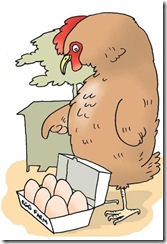
So here’s my advice, to the public and policymakers alike: Don’t count your recoveries before they’re hatched. THE NEW YORK TIMES

WEEKEND XTRA

From WEEKEND TODAY, Business – 18, 19-April-2009

Tuesday, April 21, 2009

Cuts are in the air

AIRLINE WOES

SINGAPORE Airlines (SIA) and Cathay Pacific Airways may soon have to go down the path that Qantas took earlier this week when the Aussie carrier slashed its profit forecast and announced 1,750 job cuts, say analysts.

“All airlines in Asia will have to make similar tough decisions,” said Mr Jim Eckes, managing director of industry adviser Indoswiss Aviation. “With traffic falling so rapidly, it’s going to be difficult for many airlines to make a profit.”

Traffic for Asia-Pacific carriers sank almost 13 per cent in February, the steepest decline since June, according to the International Air Transport Association (Iata).

Qantas is examining measures, such as passengers tagging their own bags or checking in via mobile phone, to further cut costs.

“If your top line has fallen off the cliff, then you have to adjust your costs,” said Mr Christopher Wong, a fund manager at Aberdeen Asset Management Asia in Singapore. “Whether it’s cutting headcount or reducing working hours, that’s the only thing airlines can adjust.”

Already, SIA — which gets 40 per cent of its revenue from premium travel — is removing 17 per cent of its fleet starting April, slashing work days and freezing management wages and negotiating with pilots to take unpaid leave.

Cathay has also offered staff unpaid leave, curbed capacity growth and delayed a new cargo terminal in the city after posting a loss of HK$7.9 billion ($1.5 billion) in the second half. Its chairman Christopher Pratt last month said the aviation industry was in a “crisis”.

Mr Eckes said Asia Pacific airlines might be the hardest hit by the crisis because of their dependence on premium travellers. Filling up the coach-class seats won’t be enough to compensate for lack of premium travellers.

“Business demand has dropped sharply since August and that’s hurting profits,” said Makoto Murayama, an analyst Nomura Securities in Tokyo. “Things are going to get worse.”

Premium travel dropped the most in Asia in January, falling 23 per cent within the region, and 25 per cent on routes across the Pacific, according to Iata. BLOOMBERG

From TODAY, Business - Thursday, 16-April-2009
Saturday, April 18, 2009

Something extra is brewing at Han’s

EXPANSION PLANS

It aims to open two new outlets and invest in training and upgrading equipment


Valarie Tan, valarie@mediacorp.com.sg

090415-Hans Han’s managing director Han Choon Fook hopes to raise the standard further. Wee Teck Hian


DESPITE the recession, something’s brewing at Han’s Cafe and Cake House.

The 28-year-old chain is investing over $900,000 to expand its operations. This includes new gourmet coffee machines for its 21 outlets across Singapore.

Mr Han Choon Fook, Han’s managing director, said: “We’re hoping that if we can raise the standard further, we can one day make gourmet coffee a strong beverage in Han’s.”

It already sells about 3 million cuppas each year.

The chain said the recession has not significantly affected business so far, but its management warned turnover could fall by about 5-to-10 per cent should the economic situation worsens.

In the meantime, it is tapping on government subsidies to seize new opportunities, including upgrading staff skills.

It is taking advantage of subsidies from the Workforce Development Authority and SPRING Singapore to engage consultants for in-house customer service training for some 300 frontline staff.

Its courses, conducted in two phases, will cost the firm about $300,000. Training started even before the recession kicked in late last year.

“We know that in the competitive market we have got to raise our standards,” said Mr Han.

To maintain staff morale, the company plans to pass on to its workers money it receives under the Jobs Credit Scheme.

Under this scheme, the Government is providing cash grants to employers to help them preserve jobs by subsidising their manpower costs.

Employers are receiving a 12 per cent cash grant on the first $2,500 of each month’s wages for each employee on their CPF payroll. Few firms have been passing this on.

Han’s business is growing organically with plans to open two new outlets by May, each costing about $250,000. A new outlet in Buona Vista will open by the end of April and another in Jurong in May.

Its main challenge right now is finding young, qualified Singaporeans to fill frontline and operations positions. Even though half of its current 360-strong workforce are from overseas, Han’s hopes the government can be more flexible to allow them to hire more in the future.

Han’s annual turnover grew 16 per cent last year to $28 million.

It is no stranger to recessions, having survived the Sars crisis in 2003 when it saw turnover fall by about 10 per cent.

Looking into the future, it is working on new concepts to reach out to a younger market to cater to younger people’s food and drink tastes.

It is also not ruling out expanding into overseas markets, like China and Vietnam. Han’s has sent officers to franchising exhibitions to further explore the idea.

CHANNEL NEWSASIA

From TODAY, Enterprise – Wednesday, 15-April-2009

BUSINESS COMMENT

Policies that encourage such rebalancing will help world economy

Stephen Roach


DEBATE rages over the endgame For the Great Recession. The broad consensus among policymakers and business leaders is that the world economy is in the midst of its worst decline since the 1930s Depression. There is a presumption that another depression is a distinct possibility if immediate steps are not taken to contain the downward spiral.

This debate misses the point — and dangerously so. Monetary and fiscal authorities have made it quite clear that they are prepared to do everything in their power to avoid such an outcome. I suspect they will ultimately get their way. Yet there is a serious risk to this policy strategy. By fixating on the anti-depression drill, the authorities are failing to address the root cause of the current crisis and recession — the lethal unwinding of unsustainable global imbalances.

Unfortunately, the myopia of the political cycle pre-ordains such a policy response. A resumption of economic growth is all that ever seems to matter for poll-driven politicians. Tough problems are always deferred with a vacuous promise to tackle them in due course. Then that due course always is pushed out further and further in time.

This is the mindset that got us into this mess. The United States’ current account deficit, one of the most glaring manifestations of an economy built on quicksand, did not emerge out of thin air. It was the outgrowth of an unprecedented shortfall of domestic saving. Saving itself was depressed by the illusions of an asset-dependent American economy and a willingness of consumers to live well beyond their means through extracting equity from over-valued homes.

The denial was global in scope. Export-led economies were delighted to draw support from bubble-dependent American consumers. And now, that house of cards has collapsed.

The Depression Foil might well end up recreating this madness. Once again, the US is leading the charge. The Fed wants to get credit flowing again to still over-extended American consumers, Congress wants to stop the bleeding in the housing market, and the White House wants consumers to start spending again.

Put it together and it all smacks of a dangerous sense of deja vu — promoting a false recovery by kick-starting over-extended American consumers to borrow once again by leveraging their major asset.

The Depression Foil blinds policymakers and politicians to the imperatives of global rebalancing. This crisis and the wrenching recession it has spawned are all about a destabilising shift in the mix of global saving and aggregate demand.

That mix needs to be redressed. The excess spenders in the US need to save and the excess savers in the rest of the world, especially in Asia, need to spend. Policies that encourage such rebalancing will put the world economy on a more stable and sustainable path and go a long way in avoiding another crisis like this.

Yet, the Depression Foil makes it exceedingly difficult for an unbalanced world to get its act together. The recently concluded G20 summit was notable for its failure to address this critical challenge. Policymakers and politicians need to move beyond their depression fixation and aim at achieving a better balance in the global economy before it is too late.

The writer is the chairman of Morgan Stanley Asia. This is an abridged version of a commentary that first appeared on Bloomberg yesterday.

From TODAY, Business – Tuesday, 14-April-2009

Friday, April 17, 2009

GDP may shrink 6 to 9%

MTI's Advance Estimates

THE Ministry of Trade and Industry (MTI) announced this morning that it expects Singapore’s GDP to contract by 6.0 to 9.0 per cent this year, lower than the contraction of 2.0 to 5.0 per cent that it had forecast on Jan 21.

Advance estimates for the Singapore economy indicate that economic activity slowed down sharply in the first quarter of the year.

On a seasonally adjusted annualised basis, real GDP contracted by 19.7 per cent compared to the previous quarter, worse than the 16.4 per cent contraction in the fourth quarter of last year.

Compared to the same period last year, real GDP is expected to contract by 11.5 per cent, compared to the 4.2 per cent contraction registered in the last quarter.

MTI’s earlier forecast had factored in the likelihood of a weak first quarter but the advance estimates indicate that actual GDP growth will undershoot earlier expectations by a significant margin.

The decline in the first quarter of this year affected every sector, with the exception of the construction sector.

Falling external demand late last year and early this year has severely affected domestic manufacturing output.

In year-on-year terms, the manufacturing sector is estimated to have contracted by 29.0 per cent in the first quarter, compared to the 10.7 per cent contraction in the last quarter of last year.

The manufacturing decline was led by the electronics and precision engineering segments but the chemicals cluster and the biomedical manufacturing cluster also saw large declines.

With most of Singapore’s key trading partners still in recession, the manufacturing sector will continue to remain weak for the rest of the year.

The services producing industries contracted by 5.9 per cent in year-on-year terms.

The collapse in global trade in recent months severely affected the wholesale and retail trade sector and the transport and storage sector in the first quarter of this year.

For the rest of this year, these sectors will continue to be weighed down by the poor prospects for global trade.

As a result of falling global economic activity, the World Trade Organisation has forecast that world trade will contract by 9 per cent (by volume) this year — the worst performance since World War II. The hotels and restaurants segment also contracted because of lower tourist arrivals.

Financial services also continued to contract but at a more moderate pace compared to the previous quarter.

The construction sector was the only sector that showed signs of robust growth. It is estimated to have grown by 25.6 per cent in the first quarter quarter of this year, supported by the strong pipeline of committed projects in both housing and infrastructure.

The ministry says that the global economy is expected to remain weak in the coming quarters. While there are tentative signs of some stabilisation in the housing, financial and manufacturing sectors in the US, it adds, they do not point to a clear turnaround in economic activity.

In recent months, the International Monetary Fund, the World Bank and the Organisation for Economic Co-operation and Development have successively slashed their growth forecasts for this year for the world, the developed economies and regional economies.

Taking into account the sharp deterioration in the first quarter of this year, and the weak global outlook for the rest of the year, the ministry says that it is revising the economic growth forecast for this year to -9.0 to -6.0 per cent.

From TODAY - Tuesday, 14-April-2009
Tough times may prompt a weak Singapore dollar. Bloomberg

SINGAPORE’S economy likely contracted further in the first quarter amid a protracted global downturn, and economists say this will likely prompt the central bank to allow the local currency to continue to weaken.

A median forecast by 10 economists polled by Dow Jones Newswires tips Singapore’s gross domestic product to have contracted 7.5 per cent in seasonally-adjusted, annualised terms from the previous three months, compared with a record contraction of 16.4 per cent in the fourth quarter.

The poll also tips a 8.6-per-cent contraction from the corresponding period a year earlier, far worse than the Government’s 2009 GDP forecast of a decline between 2 and 5 per cent and the previous quarter’s 4.2 per cent contraction.

This also surpasses the 6.4-per-cent year-on-year GDP contraction in the third quarter of 2001, which the Department of Statistics said was the worst since 1976 — the earliest available date for quarterly GDP estimates.

The GDP data will be released tomorrow, the same day that the Monetary Authority of Singapore (MAS) will issue its policy statement.

While a weaker Singapore dollar cannot arrest the steep fall in external demand, a majority of analysts believe the central bank will likely lower its undisclosed exchange rate policy band to support the ailing economy. The MAS last eased policy in October by shifting to a neutral stance from its previous aim for the currency’s gradual appreciation.

Some analysts believe the MAS will take a stronger step and shift to an outright depreciation policy. If the Singapore dollar’s nominal effective exchange rate is near the band’s mid-point, they say lowering the band may not be enough. “Given the gravity of the times, surely bold action is called for,” said Westpac foreign exchange strategist Sean Callow. Dow Jones

From TODAY, Business - Monday, 13-April-2009
Sunday, April 5, 2009

Electric dreams

China could well be coming into its “gigantic” position of domination in the world arena of car-manufacturing industry. Who knows how this will impact everybody else? Not to mention an all-electric car? Manufacturers first, then fuel supply next; then what?

-----


China’s car industry
Govt-backed plan to turn China into top maker of hybrids

TIANJIN (China) — Chinese leaders have adopted a plan aimed at turning the country into one of the leading producers of hybrid and all-electric vehicles within three years, a move that will make it the world leader in electric cars and buses.

The goal suggests United States’ Big Three car-makers, already struggling to stay alive, will face even stiffer foreign competition on the next field of automotive technology.

“China is well-positioned to lead in this,” said Mr David Tulauskas, director of China government policy at General Motors.

To some extent, China is making a virtue of a liability. It is behind the US, Japan and other countries in making gas-powered vehicles, but by skipping the current technology, China hopes to get a jump on the next.

China’s intention, in addition to creating a world-leading industry that will produce jobs and exports, is to reduce urban pollution and decrease its dependence on oil.

A recent report by consulting firm McKinsey and Company estimated that replacing a gasoline-powered car with a similar-size electric car in China would reduce greenhouse emissions by only 19 per cent. It would reduce urban pollution, however, by shifting the source of smog from car exhaust pipes to power plants, which are often located outside cities.

Beyond manufacturing, subsidies of up to US$8,800 ($13,300) are being offered to taxi fleets and local government agencies in 13 Chinese cities for each hybrid or all-electric vehicle they purchase. The state electricity grid has been ordered to set up electric car charging stations in Beijing, Shanghai and Tianjin.

Government research subsidies for electric car designs are increasing rapidly. And an interagency panel is planning tax credits for consumers who buy alternative energy vehicles.

China wants to raise its annual production capacity to 500,000 hybrid or all-electric cars and buses by the end of 2011, from 2,100 last year, government officials and Chinese car-making executives said. By comparison, CSM Worldwide, a consulting firm, predicts that Japan and South Korea together will be producing 1.1 million hybrid or all-electric light vehicles by then.

- THE NEW YORK TIMES


From TODAY, World
Friday, 03-April-2009